News
AJ Adhesives, Inc. – Holding North American Manufacturing Together.
Substrate Types 101: How Packaging Materials Affect Adhesive Performance
AJ Adhesives – Substrate Types 101: How Packaging Materials Influence Adhesive Performance
March 11, 2026
In packaging and converting environments, adhesive selection rarely starts with the adhesive itself. It starts with the substrate.
The materials being bonded — corrugated board, plastic bottles, flexible films, coated labels, or metal containers — ultimately determine how an adhesive behaves on the line. Surface energy, porosity, coatings, and material composition all influence how well an adhesive wets out, penetrates the surface, and forms a reliable bond. This is why the same adhesive can perform perfectly in one application and struggle in another. Adhesives are not designed to bond to “anything”; they are engineered to interact with specific materials under real production conditions.
Understanding substrate behavior is one of the most important steps in selecting adhesives that deliver consistent performance on packaging lines. In many packaging operations, adhesive performance issues often stem from substrate characteristics rather than the adhesive formulation itself. Changes in board density, recycled fiber content, coatings, or plastic resin types can shift how adhesives behave during application and curing.
This guide introduces the most common packaging substrates and explains how their properties affect adhesive performance in real manufacturing environments.
Substrate Properties: What Are They and What Do They Mean?
For an adhesive to work properly, it must penetrate the surface, spread evenly, and form a bond as it cools, dries, or cures. Several substrate properties directly influence this process.
Surface energy determines how easily an adhesive spreads across a material. High-energy surfaces allow adhesives to flow and anchor easily, while low-energy surfaces can repel adhesives and limit bond strength.
Materials like paperboard and glass typically allow good wet-out. Plastics such as polyethylene or polypropylene often require specialized adhesives because they resist wetting.
Porous materials absorb adhesives into their structure, creating mechanical bonds as the adhesive penetrates the fibers. Non-porous surfaces rely almost entirely on surface adhesion.
This is why many water-based adhesives perform extremely well on paper substrates but may struggle on plastics or films without proper formulation.
Coatings and Surface Treatments
Modern packaging materials often include coatings for moisture resistance, print quality, or barrier performance. These coatings can dramatically change how adhesives interact with the surface.
Coatings can reduce absorption, lower surface energy, or introduce chemical layers that affect bond formation.
Material Composition
Even when two substrates look identical, their composition may differ. Recycled content, additives, fillers, and manufacturing methods can all influence adhesive compatibility and performance.
Substrate variability has become an increasingly important factor as packaging materials evolve, especially with higher recycled fiber content and sustainability-driven material changes.
Corrugated & Paperboard Substrate
Corrugated board and paperboard remain some of the most adhesive-friendly substrates in packaging because of their porous fiber structure. This porosity allows adhesives — especially hot melts and water-based formulations — to penetrate the fibers and create strong mechanical bonds. However, corrugated materials can still introduce challenges depending on their construction.


Key variables that affect adhesive performance include:
- Board Density and Flute Structure
- Corrugated board is made of flat paper layers with a wavy middle layer called the flute. The density of the paper and the shape of the flutes affect how the adhesive spreads, absorbs, and compresses during bonding.
- Recycled Fiber Content
- Recycled fiber content refers to how much of the board is made from previously used paper fibers. These fibers can change the surface texture and absorbency of the board, which can affect how consistently adhesives bond.
- Moisture Levels in the Board
- Corrugated board naturally contains moisture from the surrounding environment. Too much or too little moisture can change how quickly adhesive sets and how strong the final bond becomes.
- Dust or Fines on the Surface
- Dust or “fines” are small paper particles that can sit on the board surface during production. These particles can block adhesive from contacting the board directly, which can weaken the bond.
Recycled corrugate can introduce variability in absorption and surface cleanliness, which may affect bond strength or adhesive transfer consistency. Operators sometimes notice adhesive performance changes before realizing the corrugated supply itself has shifted.
In high-speed case sealing applications, adhesives must balance fast set speed with adequate penetration so the bond forms before the case moves downstream.
Corrugated bonding is common in:
- Case and Carton Sealing
- Applying adhesive to close and secure corrugated boxes or cartons after they have been filled with products.
- Tray Forming
- Using adhesive to hold folded corrugated pieces together to create open trays that carry or display products.
- Retail-Ready Packaging
- Packaging designed so the shipping container can quickly become a store display, often using adhesive to hold the structure together while still allowing easy opening.
- Corrugated Lamination
- Bonding layers of paper or linerboard together with adhesive to create corrugated board or to attach printed sheets to the outside of a box.
Because these substrates are porous, they often work well with both hot melt and water-based adhesives, depending on the application requirements.
Plastics (PET, HDPE, PP)
Plastic packaging introduces very different bonding conditions compared to fiber-based materials. Unlike corrugated board, plastics are typically non-porous with low surface energy, meaning adhesives cannot penetrate the material and must rely entirely on surface adhesion. Different plastics also behave differently.
- PET (Polyethylene Terephthalate)
- PET bottles are widely used in beverage packaging and labeling applications. PET typically has moderate surface energy, making it more adhesive-friendly than many other plastics.
- PET plastic is usually clear, glossy, and highly transparent, giving it a glass-like appearance that allows consumers to easily see the product inside. It is commonly used for beverage bottles, clear food containers, and clamshell packaging because it provides strong clarity and a smooth, shiny surface.
- HDPE (High-Density Polyethylene)
- HDPE has lower surface energy and can be more difficult for adhesives to wet out. Specialty formulations are often required to achieve reliable bonding.
- HDPE usually appears more opaque and slightly matte. Bottles made from HDPE often look solid white or natural milky-translucent and tend to have thicker, sturdier walls, which is why it is commonly used for products like detergent bottles, milk jugs, and chemical containers.
- PP (Polypropylene)
- Polypropylene is one of the most challenging packaging plastics for adhesives due to its very low surface energy. Adhesives designed for polyolefins are typically required.
- Polypropylene often looks slightly clearer or more translucent than HDPE and typically has a smoother, slightly glossier surface. It is also more rigid, which is why it is frequently used for caps, closures, flip-top lids, yogurt cups, and rigid food containers.


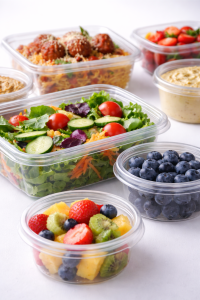
Plastic bonding applications include:
- Pressure-Sensitive Labeling
- Applying labels that already have adhesive on the back, which stick to a product when pressure is applied by a labeling machine or roller.
- Wrap-Around Bottle Labeling
- Applying a label that wraps around part or all of a bottle or container, with adhesive used to hold the label securely in place.
- Assembly Applications
- Using adhesive to join multiple components of a product or package together instead of using mechanical fasteners like screws, staples, or tape.
- Specialty Packaging Components
- Applying adhesives to smaller or unique packaging parts—such as inserts, windows, handles, or protective pads (like in plastic fruit containers)—that support the structure or function of the final package.
Because plastics do not absorb adhesive, bond performance depends heavily on even spread, adhesive chemistry, and environmental conditions.
Glass & Metal Substrate
Glass and metal packaging surfaces are non-porous but have high surface energy, which allows adhesives to spread easily. This combination makes them relatively predictable substrates for many adhesive types, particularly in labeling applications.


However, glass and metal bonding can still introduce challenges related to:
- Temperature Variation
- Changes in temperature can affect how adhesives behave, including how quickly they set and how well they bond to a surface. Very hot or very cold conditions can weaken the bond or make it harder for the adhesive to perform consistently.
- Condensation or Moisture on the Surface
- Water or condensation on a surface can prevent adhesive from properly contacting the material. If adhesive is applied to a wet surface, the bond may be weaker or may fail completely.
- Label Material Compatibility
- Different label materials—such as paper, plastic film, or foil—interact differently with adhesives. The adhesive must be compatible with both the label material and the container surface to ensure the label stays in place.
- Surface Cleanliness
- Dust, oil, or residue on a surface can interfere with adhesive bonding. Clean surfaces allow the adhesive to make full contact with the material, which helps create a stronger and more reliable bond.
In beverage bottling environments, condensation on cold bottles can interfere with adhesive bonding if the formulation is not designed to tolerate moisture.
Glass and metal bonding is commonly seen in:
- Bottle Labeling
- Applying labels to glass bottles used for beverages, sauces, or other packaged products.
- Food Container Labeling
- Attaching labels to glass jars or metal food containers to provide product information, branding, and regulatory details.
- Specialty Packaging Assembly
- Using adhesive to attach decorative or functional components to glass or metal packaging, such as seals, inserts, or display features.
- Industrial Labeling Applications
- Applying durable labels to metal containers, equipment, or industrial products for identification, safety information, or tracking.
Adhesives used in these environments must maintain bond integrity through temperature swings, moisture exposure, and distribution conditions.
Flexible Films & Packaging Laminations
Flexible packaging materials — including films like BOPP, PET film, and multilayer laminates — present unique bonding challenges. Unlike rigid substrates, flexible films often have smooth, treated surfaces designed for printing or barrier performance, which can affect adhesive behavior.


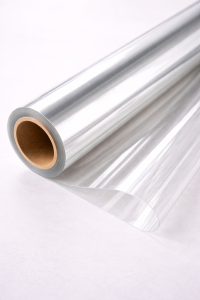
These substrates are typically used in:
In lamination processes, adhesives must spread evenly across wide surfaces and cure properly without creating defects such as bubbles, tunneling, or delamination. Because these substrates are non-porous, lamination adhesives rely heavily on proper application control, compression, and drying conditions to form strong bonds.
Coated vs. Uncoated Substrate
One of the most overlooked factors in adhesive performance is the presence of coatings. Many packaging materials are coated to improve printing, moisture resistance, or product protection. These coatings can significantly change how adhesives interact with the surface.

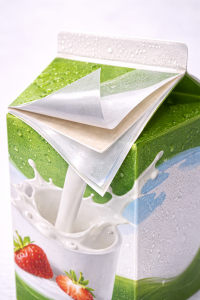


Common coatings include:
- Clay Coatings on Paperboard
- A thin layer of clay is applied to paperboard to create a smoother, brighter surface that improves printing quality and appearance.
- Polyethylene Coatings on Cartons
- A plastic layer of polyethylene is applied to cartons to help protect the package from moisture and liquids, commonly used in beverage and food packaging.
- Barrier Coatings for Food Packaging
- Barrier coatings are applied to packaging materials to block moisture, oxygen, grease, or odors from passing through the package and affecting the product inside.
- Release Coatings on Label Liners
- Release coatings are applied to the backing paper or film behind labels so the labels can peel off easily when they are ready to be applied to a product.
Uncoated substrates typically absorb adhesive more easily, allowing strong mechanical bonding. Coated surfaces may limit absorption and require adhesives designed specifically for those materials. In labeling applications, for example, adhesives must bond to both the label material and the container surface, meaning two substrate types must be considered simultaneously.
Why Substrate Understanding Improves Adhesive Selection
In many manufacturing environments, adhesive troubleshooting begins with adjusting temperature, bead size, or application weight.
But the adhesive is only one part of the bonding system. Substrate properties, machine setup, environmental conditions, and line speed all influence how an adhesive performs.
Successful adhesive selection starts with understanding the material being bonded.
When substrate characteristics are considered early — including surface energy, porosity, coatings, and material variability — manufacturers can choose adhesives that perform consistently without excessive adjustments or waste.
That approach leads to more stable lines, cleaner equipment, and fewer production disruptions.
Final Thoughts: Adhesives Work with Substrates, Not Just Surfaces
Adhesives don’t bond to “packages.” They bond to materials.
Every substrate introduces its own chemistry, structure, and behavior. When adhesive formulation and substrate characteristics align, bonding becomes predictable and reliable.
When they don’t, even high-performance adhesives may struggle.
Understanding substrate types is the first step toward selecting adhesives that support efficient production, strong bonds, and stable packaging operations.
At AJ Adhesives, we work directly with production teams, maintenance crews, and purchasing departments to evaluate substrate behavior, adhesive compatibility, and real-world line conditions so manufacturers can choose solutions that perform consistently over time.
 Ready to find the solution for your line? Contact your AJ Adhesives representative today!
To speak with someone immediately, call: (314) 652-4583
For more information or questions, email us at: info@ajadhesives.com
Follow us on LinkedIn & Facebook for more tips, resources, and updates!